Quick Answer
IV sedation dentistry delivers calming medication directly into a vein, so you stay deeply relaxed yet responsive during treatment. At Saintsbury Family Dental in Lucan, ON, it suits patients with high anxiety, strong gag reflexes, or long procedures. A trained dentist monitors you closely throughout, and most people remember little afterward.
Few dental topics attract more half-truths than sedation. Patients ask whether they will be “put under,” whether they will say embarrassing things, and whether it is even safe. Let us cut through the noise. This guide to IV sedation dentistry explained in Lucan, ON, answers the real questions people bring to our chairs and corrects the myths that keep nervous patients away.
What Is IV Sedation at the Dentist?
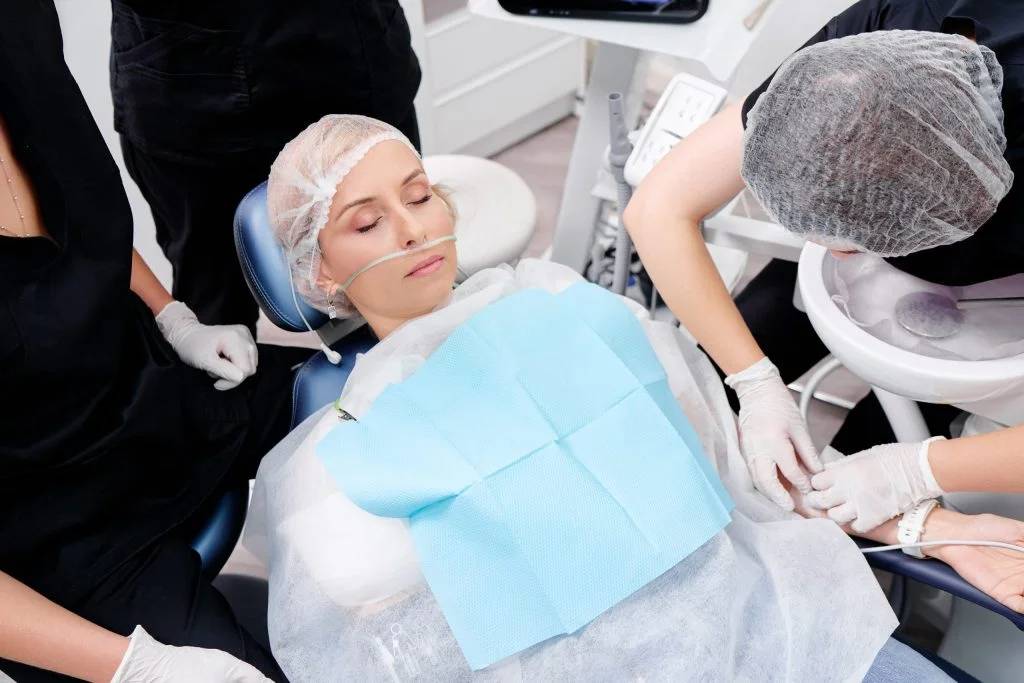
IV sedation is a controlled form of conscious sedation delivered through a small vein, usually in the arm or hand. You are not unconscious. Instead, you drift into a deeply relaxed, drowsy state while remaining able to respond to gentle prompts. Because the medication enters your bloodstream directly, it works quickly, and your dentist can adjust the depth precisely during the appointment.
This differs from general anaesthesia, where you are fully asleep. With IV sedation, your protective reflexes stay intact. Furthermore, most patients remember very little of the visit afterward, which is a genuine relief for anyone whose fear stems from past experiences.
Myth: “IV sedation knocks me out completely.”
This is the most persistent misconception. Conscious sedation keeps you breathing on your own and able to cooperate. You simply feel calm and detached. Consequently, the appointment passes quickly, and the time distortion many patients describe is entirely normal.
Who Is IV Sedation Dentistry Right For?
IV sedation helps patients who struggle with ordinary appointments for specific, well-documented reasons. A systematic review in the Australian Dental Journal noted that dental anxiety is common and triggers measurable physical responses, including increased heart rate and blood pressure, which often lead to avoided appointments. Sedation interrupts that cycle.
Specifically, this option may suit you if you experience:
- Severe dental anxiety or a history of traumatic visits.
- A strong gag reflex that makes treatment difficult.
- Long or complex procedures completed in a single sitting.
- Difficulty getting numb with local anaesthetic alone.
However, IV sedation is not the only path. For milder nerves, our team often recommends gentler alternatives. You can explore the full range of comfort options through our IV sedation page and compare them with lighter choices described below.
How IV Sedation Compares With Other Options
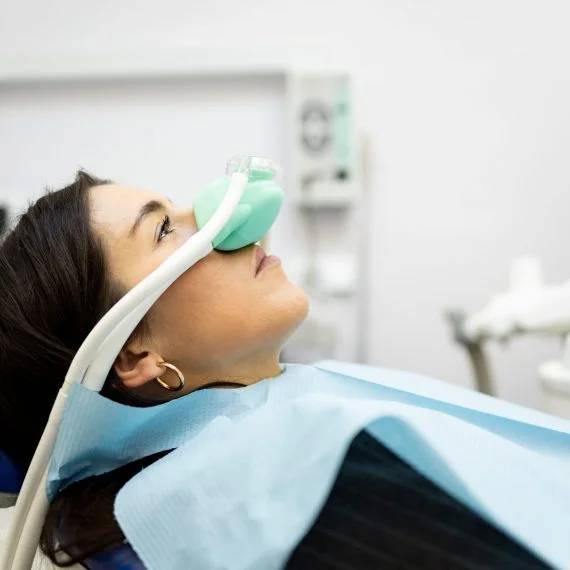
Saintsbury Family Dental offers three sedation levels, so care fits the patient rather than the reverse. Nitrous oxide, often called laughing gas, provides light relaxation that wears off within minutes. Oral sedation uses a prescribed tablet for moderate calm without needles. IV sedation sits at the deeper end, ideal for intensive treatment or significant fear.
Additionally, the right choice depends on your health history, the procedure planned, and your personal comfort level. A short conversation with our dentists usually settles the question quickly.
What to Expect Before, During, and After
Preparation starts before you arrive. Typically, you will fast for several hours and arrange a responsible adult to drive you home. During the appointment, your dentist places the IV line, then monitors your oxygen, pulse, and blood pressure continuously. This vigilance is not optional; it is a professional standard.
In Ontario, sedation is tightly regulated. According to the Royal College of Dental Surgeons of Ontario, dentists must hold specific authorization to provide sedation, and facilities undergo inspection to confirm safety standards. Therefore, the calm you feel is backed by serious oversight.
Afterward, grogginess lingers for the rest of the day. Consequently, you should rest, skip driving, and avoid important decisions until tomorrow. Most patients feel completely normal by the following morning.
Myth: “Sedation isn’t safe.”
When provided by a qualified, authorized dental team with continuous monitoring, conscious sedation has a strong safety record. Research on modern sedation agents, such as a review of remimazolam in the Journal of Oral Science, highlights newer medications with fast onset, quick recovery, and few side effects. Safety ultimately depends on proper training, screening, and monitoring, all of which are built into our protocol.
Combining Sedation With Treatment in Lucan
IV sedation rarely stands alone. Instead, it supports procedures that benefit from a relaxed, still patient. For example, it often pairs well with complex extractions, including wisdom teeth removal, lengthy restorative work, or multiple treatments combined into one visit. Pairing sedation with efficient care means fewer appointments and less overall stress.
Our community-focused practice at 100 Main St serves Lucan and the surrounding area, and we hold a 4.9/5 Google rating across more than 400 reviews. Moreover, we accept the Canadian Dental Care Plan, which helps more families access the comfortable care they need.
Frequently Asked Questions
Will I feel any pain during IV sedation?
No. Local anaesthetic still numbs the treatment area, while the sedation keeps you calm and detached. Most patients report no memory of discomfort at all.
Is IV sedation the same as being asleep?
Not quite. You remain conscious and able to respond, yet deeply relaxed. General anaesthesia, by contrast, renders you fully unconscious, which IV sedation does not.
How long does it take to recover?
Expect drowsiness for the rest of the day. You will need someone to drive you home, and you should rest. Typically, patients feel fully alert by the next morning.
Can I eat before my appointment?
Usually no. Your dentist will give specific fasting instructions beforehand, since an empty stomach reduces risk during sedation.
Ready to Learn More?
If dental fear has kept you away, IV sedation may change everything. Our Lucan team will review your health, explain your options honestly, and recommend the lightest effective approach. Contact Saintsbury Family Dental today to book a consultation and ask every question on your mind.
Sources & References
- Royal College of Dental Surgeons of Ontario, Sedation and Anesthesia
- Management strategies for adult patients with dental anxiety in the dental clinic: a systematic review (Australian Dental Journal, 2022)
- Sedation outcomes for remimazolam, a new benzodiazepine (Journal of Oral Science, 2021)