Quick Answer: Three digital tools have made dental implant planning more accurate. Three-dimensional cone-beam CT (CBCT) scans show the bone, intraoral scanners record the teeth and gums, and planning software combines both so the dentist can choose the implant position before surgery. In many cases, that plan becomes a 3D-printed surgical guide. Published research shows these patient-specific guides improve precision, although every scan still needs careful review by a trained dentist.
Many patients in Lucan ask us whether a dental implant can be planned more precisely today than it could ten years ago. Generally, it can. Most of that progress comes from better imaging and software, not from changes to the implant itself. This article covers the digital tools behind modern dental implant planning, what the research says about them, and what they mean for you as a patient at Saintsbury Family Dental in Lucan, ON.
What Technology Helps Dentists Plan Dental Implants More Accurately?
The short answer is digital imaging combined with planning software. Dentists used to rely mostly on flat X-rays and physical impressions. Now, dental implant technology often brings three types of data into one virtual model of your mouth.
Three-dimensional bone imaging
A standard dental X-ray shows height and detail, but it flattens everything into two dimensions. Cone-beam CT, by contrast, produces a 3D view of the jaw. As a result, the dentist can measure bone width and depth. They can also find important structures, such as nerves and the sinus floor, before choosing where an implant goes.
Intraoral scanning
An intraoral scanner is a small handheld wand that captures the teeth and gums as a digital impression. A 2024 review in the Journal of Dental Research called intraoral scanners “a cornerstone technology in digital dentistry.” The authors noted that continuous image capture and better stitching software have made scanning more efficient. However, they also pointed out that these devices still have limitations, so the scan is a tool, not a final answer.
Planning software and the virtual implant
Next, the software overlays the scan of your teeth onto the 3D bone image. This lets the dentist place a virtual implant on screen. They can test the angle, depth and spacing against both the bone and the future crown. In practice, this means the planning starts with the final tooth and works backward to the implant.
How Digital Scans Turn a Plan Into a Surgical Guide
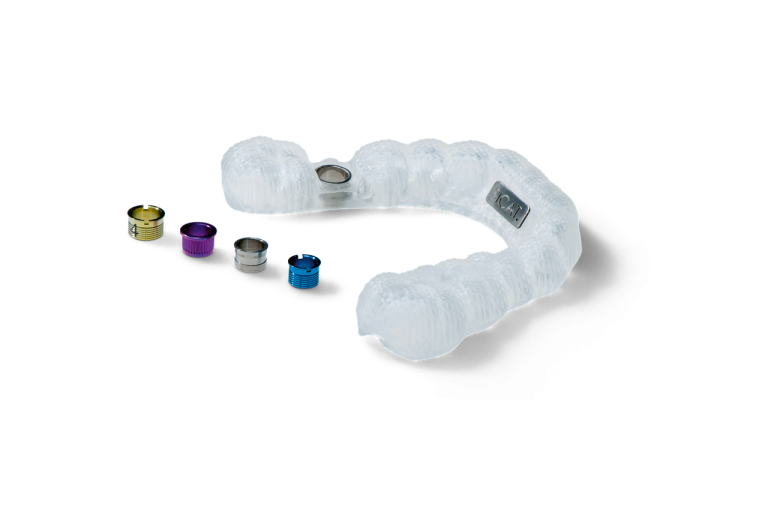
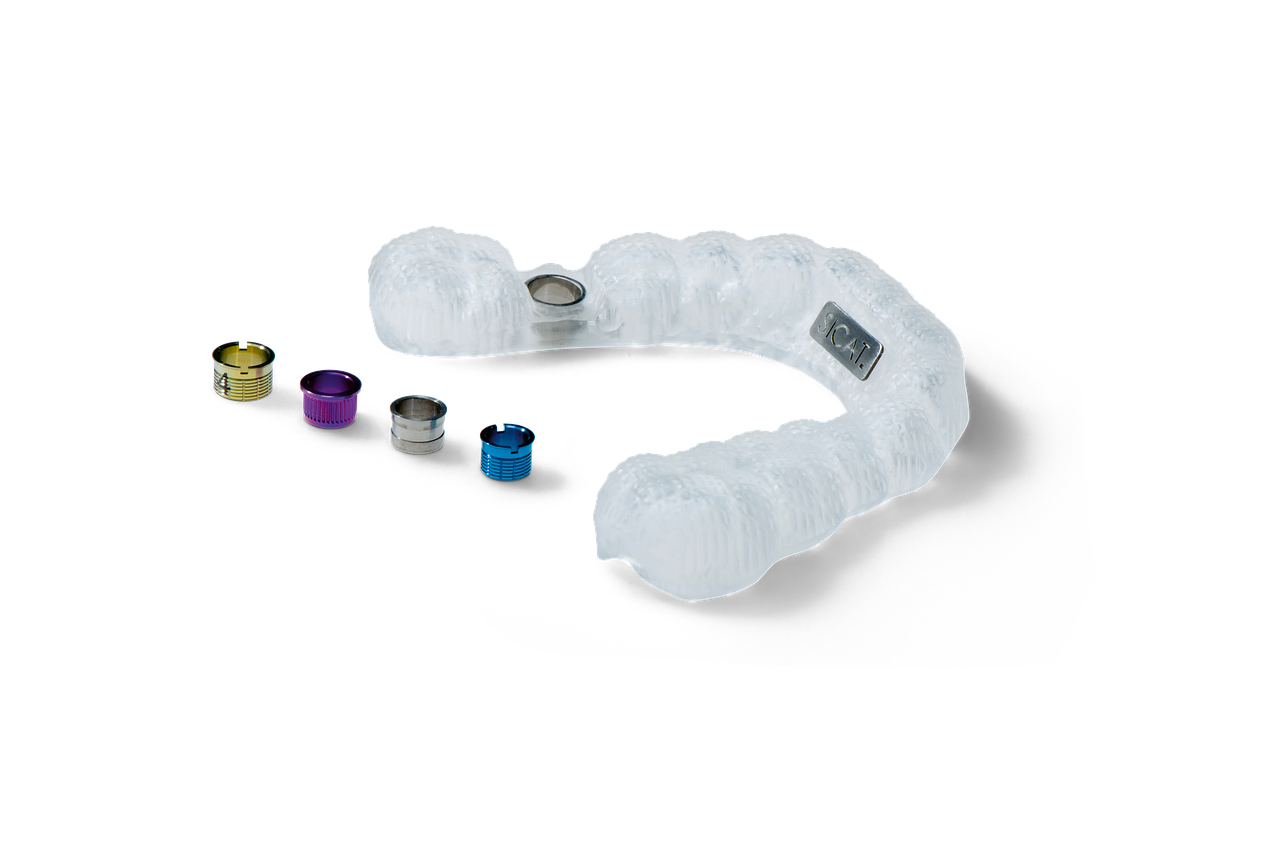
Once the plan looks right, it can be turned into a surgical guide. This is a custom template that fits over the teeth or gums and directs the drill along the planned path. Specifically, the guide carries the digital plan into the real procedure.
A 2025 study in BMC Oral Health described surgical templates as “indispensable instruments for improving precision” in dental implant placement. The authors explained that these guides draw on CBCT, intraoral scanning and 3D printing to create patient-specific devices. In other words, each guide is made for one mouth and one plan.
Static guided surgery has the strongest evidence when bone height and width are adequate. Cases that need bone grafting or ridge augmentation are more complex. Consequently, researchers are still studying how accurate guides are in those situations. A good dentist will tell you honestly which group your case falls into.
Why Digital Implant Planning Matters for Patients in Lucan
For patients, better planning usually means fewer surprises. When the dentist knows the bone anatomy in advance, they can discuss grafting, timing and crown design at your consultation. Additionally, a well-placed implant makes it easier to build a crown that looks natural and is easy to clean.
According to the Canadian Dental Association, a dental implant is an artificial root placed in the jawbone to support a replacement tooth or bridge. Since the implant has to fuse with bone, its position in that bone matters a great deal. Accurate planning protects that foundation.
Digital planning also helps with communication. Rather than explaining bone loss in abstract terms, a dentist can show you an image of your own jaw. Many patients find that clearer, and it helps them make informed decisions.
What Digital Tools Cannot Do
Technology improves accuracy, but it does not replace clinical judgment. Scans can contain errors, and software needs a trained person to check every measurement. For example, research on automated segmentation in implant planning programs shows that AI-generated models still have technical limits. Therefore, the dentist’s review stays essential.
Furthermore, long-term implant success depends on things no scanner controls. Healthy gums, good oral hygiene, not smoking and regular checkups all play a part. Periodontal health matters as much as precise placement.
Dental Implant Planning at Saintsbury Family Dental
Saintsbury Family Dental, at 100 Main St in Lucan, offers dental implants along with X-rays and digital imaging. We also offer implant-supported dentures, tooth extractions and restorative care, so most steps can happen in one office. If you feel anxious about surgery, we offer nitrous oxide, oral sedation and IV sedation.
Every implant case starts with a thorough exam. During your consultation, your dentist will explain which imaging your situation calls for and how your treatment will be planned. Ask as many questions as you like. Understanding your own plan is part of good care.
Our office accepts the Canadian Dental Care Plan (CDCP). We also keep Monday evening hours and open one Saturday a month, which helps families in Lucan and nearby communities fit care around work and school.
Frequently Asked Questions
What is the newest dental implant technology for planning?
The most established tools are 3D cone-beam CT imaging, intraoral scanners, implant planning software and 3D-printed surgical guides. Together, they let a dentist plan the implant position virtually before surgery.
Is a 3D scan always needed before a dental implant?
It depends on the case. Your dentist decides which imaging is appropriate based on your anatomy, the implant site and your health history. They will explain their reasoning at your consultation.
Does a surgical guide make implant surgery more accurate?
Research shows patient-specific surgical guides improve precision, especially when there is enough bone. Cases that involve bone augmentation are still being studied, so results there are less predictable.
Can digital planning replace the dentist’s judgment?
No. Scans and software can contain errors, so a trained dentist must check every model and measurement. Technology supports clinical decisions. It does not make them.
Book Your Implant Consultation in Lucan
Do you have a missing tooth, or are you wondering if an implant could work for you? Our team in Lucan can walk you through your options and how your treatment would be planned. Contact Saintsbury Family Dental today to book a consultation.
Sources & References
- Canadian Dental Association: Dental Implants
- Accuracy of the surgical template used in the placement of implants and orthodontic miniscrews (BMC Oral Health, 2025)
- Recent Advances in Intraoral Scanners (Journal of Dental Research, 2024)